By Saim | Last updated: September 2026
Apple just did something it hasn’t really done in a while — actually surprised people at launch. A friend of mine who follows the leak accounts religiously texted me right after the keynote basically saying half of what shipped wasn’t even in the rumor mill a few weeks out. The variable aperture camera especially caught people off guard, since that’s genuinely new territory for iPhone.
Apple officially unveiled the iPhone 18 Pro and iPhone 18 Pro Max on September 9, 2026, with pre-orders opening September 12 and the phones hitting shelves September 18. This isn’t rumor roundup territory anymore — these are the actual, confirmed specs straight from Apple’s own announcement. Let’s go through what’s actually changed.
The Headline Feature: Variable Aperture Camera
This is genuinely the biggest camera change Apple’s made to iPhone in years, and it’s not just a marketing term.
The new 48MP Fusion Main camera uses six laser-cut blades that physically open and close the aperture, adjusting between f/1.6 and f/4.0 depending on the shot. In low light, the camera can widen all the way to f/1.6 to let in more light. For group shots where you want more of the background in focus, it can narrow down toward f/4.0 for greater depth of field. This is something no previous iPhone camera has been able to do — older models had a fixed aperture, period.
Beyond the automatic adjustment, Pro users get manual control over the aperture setting directly in the Camera app, plus an API for developers to build aperture control into their own apps. There’s also a new feature called Apple Reference Image, which uses signed sensor data to create an unalterable “digital negative” you can compare against an edited photo — genuinely aimed at photojournalists and anyone who needs to prove a photo hasn’t been manipulated.
Full Camera System Breakdown
The rear camera setup on the Pro Max is a triple-lens system, all at 48MP:
- Main camera: 48MP, variable aperture f/1.6–f/4.0, 24mm wide, with sensor-shift optical image stabilization
- Telephoto: 48MP, f/2.8, periscope design offering 4x optical zoom, with 3D sensor-shift OIS
- Ultrawide: 48MP, f/2.2, 13mm, 120-degree field of view
There’s also a LiDAR scanner for depth sensing, which helps with things like Night mode portraits and AR applications.
On video, the Pro Max shoots up to 4K at 120fps with Dolby Vision HDR, supports ProRes and ProRes RAW recording, and now offers Apple Log 2 for more flexibility in color grading during editing. Time-lapse mode can now record in 4K with Dolby Vision HDR too, which wasn’t previously possible.
The front camera got a bump to 18MP, still paired with the depth-sensing system used for Face ID.
The Chip: A20 Pro
Apple’s new A20 Pro is built on a 2-nanometer manufacturing process, which is a meaningful jump in chip density and efficiency over the previous generation.
Specs-wise, it’s a 6-core CPU paired with a 7-core GPU, and Apple’s claiming up to 40% faster graphics performance compared to the A19 Pro in the iPhone 17 Pro. Memory bandwidth is up 50% too, which matters for anything demanding — heavy editing apps, gaming, on-device AI processing.
Speaking of AI, the chip includes a new Dual 16-core Neural Engine — 32 cores total, which Apple says doubles the AI processing power compared to last year’s chip. This is clearly built with on-device AI workloads in mind, tying into the new Siri AI rolling out alongside this hardware.
One detail worth mentioning: Apple redesigned the internal thermal system too, with a new vapor chamber that has three times the surface area of the previous generation. Combined with a new chip packaging layout that keeps memory out of the direct thermal path, Apple says this enables up to 40% better sustained performance — meaning the phone should throttle less during extended demanding use, like long gaming sessions or 4K video recording.
Display
The Pro Max carries a 6.9-inch LTPO Super Retina XDR OLED display, running at 120Hz with HDR10 and Dolby Vision support. Resolution comes in at 1320 x 2868 pixels, working out to roughly 460 pixels per inch. The screen’s protected by Ceramic Shield 2, Apple’s updated cover glass.
The Dynamic Island also got a redesign — it’s smaller now, freeing up more usable screen space, while gaining the ability to display up to three Live Activities simultaneously instead of the more limited version on older models.
Battery Life — The Biggest Jump Apple’s Ever Made Here
Apple specifically called this out as the largest battery life increase in iPhone history, and the numbers back that framing up.
The eSIM-only version of the Pro Max (more on what that means below) is rated for up to 45 hours of video playback, and up to 30 hours of general mixed usage based on Apple’s real-world usage modeling. Physical battery capacity comes in at 5,391 mAh for the standard Nano-SIM model, or 5,567 mAh for the eSIM-only version — the eSIM version gets a larger battery specifically because removing the physical SIM tray frees up internal space.
Charging is faster too. Wired charging gets you to 50% in around 15 minutes, and wireless MagSafe charging (using the Qi2 standard) reaches 50% in about 30 minutes. Apple also mentioned that just five minutes of wired charging on the Pro Max provides roughly seven hours of video playback, which is a genuinely useful number if you’re ever in a rush before heading out.
eSIM-Only Models — What That Actually Means
This is worth explaining since it trips people up. In several countries, including the United States, Apple is selling an eSIM-only version of the Pro Max that has no physical SIM card tray at all. This isn’t just a software restriction — removing the tray physically frees up internal space that Apple uses for a larger battery, which is exactly why the eSIM-only models get better battery life than the standard version.
eSIM is supported by over 500 carriers worldwide at this point, including all the major U.S. carriers, so for most people this isn’t a practical limitation, just a different way of activating your phone’s cellular connection. The eSIM-only Pro Max is available in the U.S., Canada, Japan, and several other specific countries and regions — worth checking whether your country’s included if this detail matters to your purchase.
Storage and Memory
The Pro Max ships with 12GB of RAM across every storage tier, and comes in four storage capacities: 256GB, 512GB, 1TB, and 2TB. There’s no memory card slot, consistent with every iPhone Apple’s made in years.
Connectivity
Both new Pro models include Apple’s own N1 wireless chip, handling Wi-Fi 7, Bluetooth 6.0, and Thread support. On the cellular side, Apple introduced its next-generation C2 modem, which the company says delivers meaningfully faster upload speeds than the previous C1X modem while using about 15% less power, and now supports mmWave 5G in the U.S. specifically.
The phone also supports satellite features for emergencies — Emergency SOS, satellite messaging, and Find My — useful when you’re completely outside cellular or Wi-Fi coverage.
Design and Build
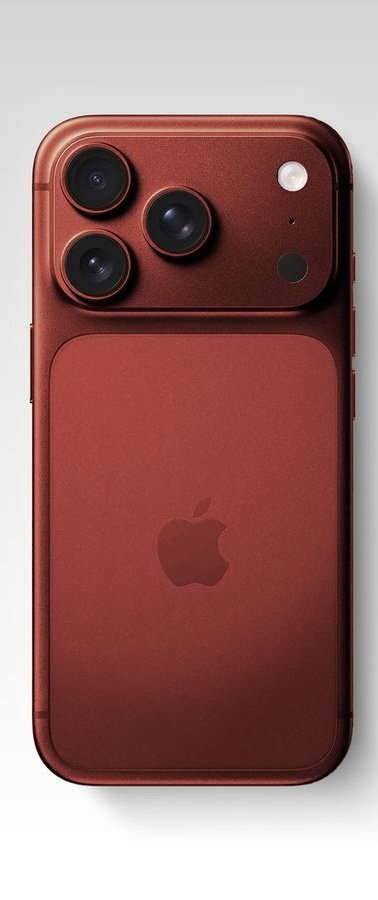
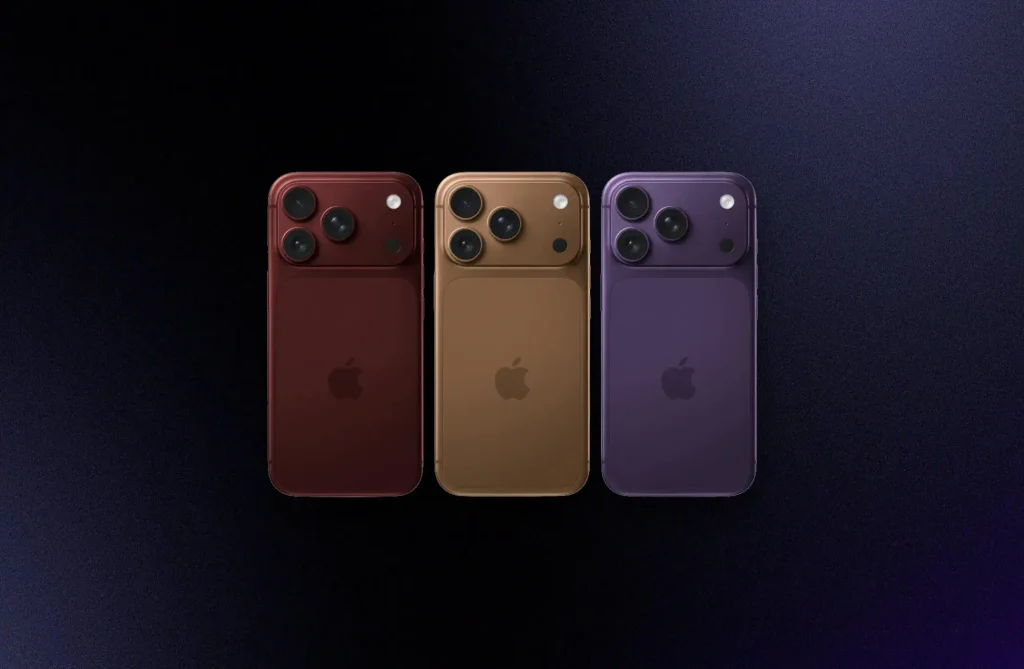
The Pro Max comes in four finishes: black, silver, glacier, and a new burgundy option. Body construction uses an aluminum frame with a Ceramic Shield 2 front and a combination aluminum/glass (Ceramic Shield) back. It weighs 240 grams and measures 9mm thick. The phone carries an IP68 rating, meaning it’s dust-tight and water resistant to a depth of 6 meters for up to 30 minutes.
Software: iOS 27 and Siri AI
The new Pro models ship with iOS 27, which became available as a free update on September 14. The headline software feature is Siri AI — an entirely rebuilt version of Siri, powered by Apple Intelligence, that’s meant to be far more conversational and capable of understanding personal context across your messages, photos, and other apps. It’s rolling out in beta form initially, supporting English at launch with more languages arriving in October.
iOS 27 also brings iPhone Handoff, letting you switch between two iPhones using the same phone number on supported carriers, along with expanded parental control tools and general refinements to the interface.
Pricing and Availability
Here’s where things stand officially: the iPhone 18 Pro Max starts at $1,199 in the U.S. for the base 256GB model, or as low as $34.99 a month through Apple’s financing options. Pre-orders opened September 12, with the phone available in stores and online starting September 18 across more than 65 countries and regions, with 20 additional regions following on September 25.
Apple’s also offering trade-in credit — up to $885 for eligible trade-ins through Apple’s standard program, or up to $1,200 through select carrier trade-in deals for devices as old as the iPhone 14.
Is the Pro Max Worth Upgrading To?
If you’re coming from an iPhone 15 or older, the jump is substantial — a genuinely new camera system with variable aperture, a significantly faster and more efficient chip, and the biggest battery life improvement Apple’s shipped on any iPhone to date.
If you’re on an iPhone 17 Pro Max already, this is a tougher call. The core design is largely similar, and a lot of what’s new here is more about refinement — faster chip, better sustained performance, incremental camera improvements — than a complete reinvention, aside from the variable aperture camera itself, which is a genuinely new capability rather than just a spec bump.
Bottom Line
The iPhone 18 Pro Max is a real, confirmed product now, not a leak roundup — and the variable aperture camera is the standout addition that actually changes what the phone can do, not just how fast it does it. Combine that with the A20 Pro chip, the biggest battery jump Apple’s ever shipped, and the rollout of Siri AI, and this is a genuinely significant release, even if the outside design looks familiar at a glance.
Starting at $1,199, it’s not a cheap upgrade, but for anyone a couple generations behind, the improvements here are substantial enough to actually notice in daily use, not just on a spec sheet.
This article is based on Apple’s official product announcement and verified specifications as of September 2026. Pricing, availability, and features may vary by region and are subject to change — check Apple’s official website for current details before purchasing.