
By Saim | Last updated: August 2026
A buddy of mine kept his money in the same big-name bank for almost fifteen years, mostly out of habit, not because he loved it. One day he actually checked his savings account interest rate. Something like 0.01%. He laughed, then got kind of annoyed, then spent an evening moving most of his savings to an online bank paying way more. Same money, same safety, dramatically better return, just sitting in a different place.
That story plays out constantly, honestly. A lot of people are leaving real money on the table simply because switching banks feels like a hassle, or because the bank they grew up with still feels like “the” bank, even when it’s quietly paying them almost nothing while charging fees for things that used to be free.
Let’s actually walk through how banking in the U.S. works right now, what’s genuinely changed, and how to figure out where your money should live.
Traditional Banks vs Online Banks — What’s the Real Difference
This is the first fork in the road for most people, and it’s worth understanding clearly before anything else.
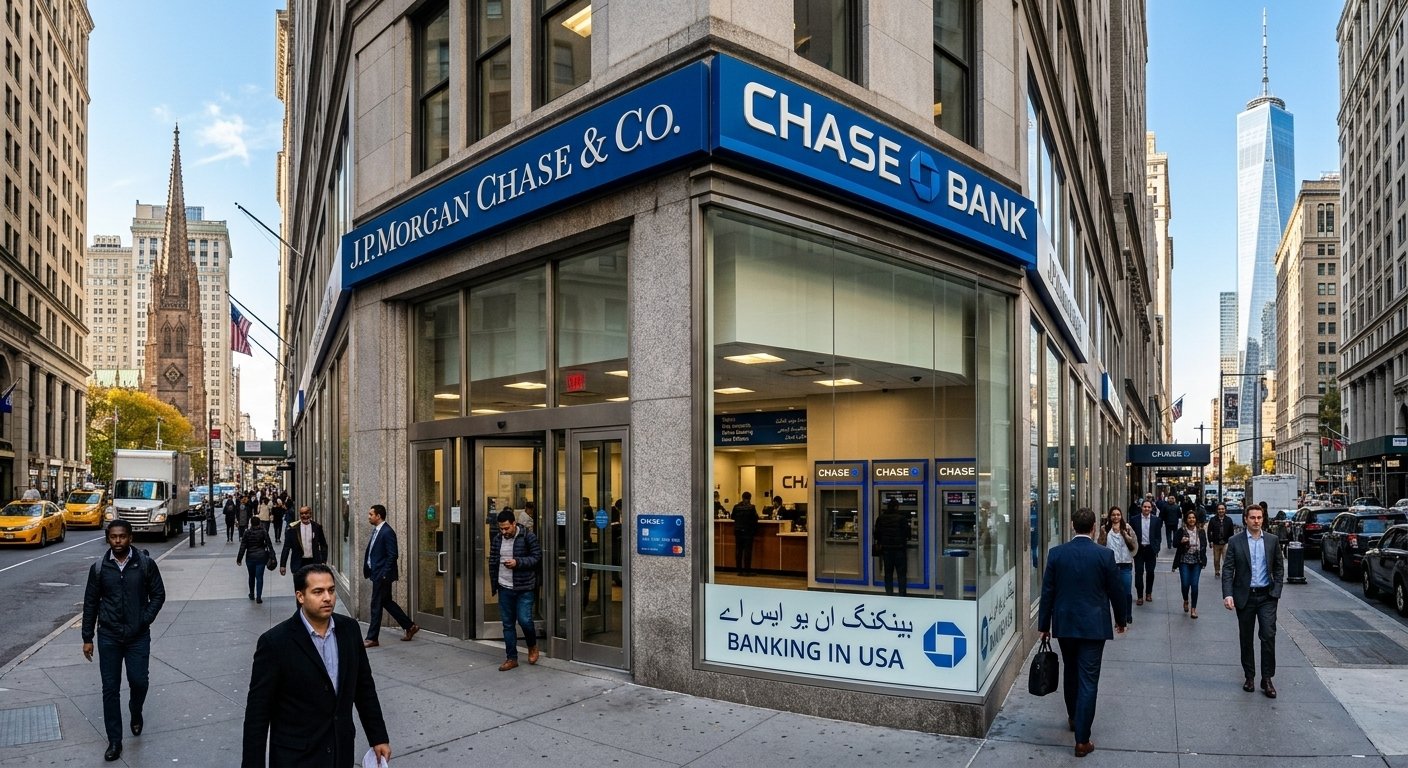
Traditional banks — the big national names with branches everywhere, plus your local community banks — offer in-person service, physical branches, ATMs on practically every corner in some cities, and a level of familiarity a lot of people value. The trade-off is usually lower interest rates on savings, and sometimes more fees, since maintaining thousands of physical branches costs real money that eventually gets passed along somehow.
Online banks operate without physical branches, which sounds like a downside until you realize it’s exactly why they can pay better rates. No branch lease payments, no tellers on staff at every location, way lower overhead overall — and a lot of that savings gets passed directly to you in the form of higher savings rates and fewer fees.
Here’s the thing people worry about and shouldn’t, generally — online banks in the U.S. are still FDIC-insured, same as traditional banks, up to the standard coverage limit per depositor per bank. Your money’s protected the same way whether the bank has a fancy branch on Main Street or exists entirely as an app on your phone.
Why This Actually Matters More Than People Realize
Interest rates on savings accounts vary wildly between traditional and online banks, and the gap isn’t small. A lot of major traditional banks pay savings rates that round down to basically nothing, while competitive online banks and high-yield savings accounts have paid meaningfully more in recent years, sometimes many times over what a traditional big bank offers on the same balance.
On a modest savings balance, this difference might feel small in absolute dollars month to month. But stretch it across years, or apply it to a larger emergency fund or short-term savings goal, and the gap becomes real money that either sits in your account working for you, or quietly disappears into a bank’s bottom line instead of yours.
What Actually Makes a Bank Worth Using
Rather than chasing whatever bank has the flashiest ad campaign, here’s what’s genuinely worth comparing.
The interest rate on savings, if that’s relevant to how you’ll use the account. For a checking account you’re just using for daily spending, this matters less. For an emergency fund or savings account sitting there for months or years, the rate difference compounds into something meaningful.
Fee structure. Monthly maintenance fees, minimum balance requirements, overdraft fees, ATM fees — these add up fast and vary enormously between banks. A lot of online banks and some traditional ones have moved toward no monthly fees and no minimum balance requirements, which genuinely changes the math compared to older-style accounts that nickel-and-dime you constantly.
ATM access. If you regularly need cash, check whether your bank has a large fee-free ATM network, or reimburses out-of-network ATM fees. Online banks without physical branches often partner with large ATM networks or reimburse fees to make up for not having their own branches on every corner.
Mobile app quality. For an online bank especially, the app basically is the bank, from your perspective. A clunky, unreliable app defeats the entire purpose of banking somewhere without physical branches to fall back on.
Customer service availability. Online banks generally offer phone, chat, or email support, but you lose the option of walking into a branch and talking to a person face to face. Worth being honest with yourself about whether that matters to you specifically, since it genuinely does for some people and genuinely doesn’t for others.
FDIC insurance confirmation. Always confirm any bank you’re considering is actually FDIC-insured before depositing money. Legitimate banks display this clearly, and it’s worth double-checking directly rather than assuming.
Checking Accounts vs Savings Accounts — Different Goals, Different Banks
Worth saying clearly — you don’t necessarily need to put all your money in one single bank. A lot of people split things intentionally.
Checking accounts are for daily spending, bill payments, debit card use. Interest rate barely matters here since the balance moves constantly anyway. What matters more is fee structure, ATM access, and how easy it is to actually move money in and out.
Savings accounts are where the interest rate conversation genuinely matters, since this money often sits for a while, accumulating interest in the background. This is exactly the account type where an online bank’s higher rate makes the biggest practical difference over time.
A pretty common setup these days — checking account at a traditional bank or credit union for daily convenience and easy in-person access when needed, paired with a high-yield savings account at an online bank specifically for the better rate on money that’s just sitting there. Best of both worlds, basically, without being locked into one bank for everything.
Credit Unions — The Option People Forget About
Traditional banks and online banks get most of the attention, but credit unions genuinely deserve a mention here too.
Credit unions are member-owned, nonprofit financial institutions, and that structure often translates into better rates on savings and loans, lower fees, and a more personal customer service experience compared to large traditional banks. The trade-off is usually a smaller branch and ATM network, and you typically need to meet some membership requirement to join — living in a certain area, working for a certain employer, or belonging to a certain group, though a lot of credit unions have expanded their membership eligibility significantly in recent years.
Deposits at credit unions are protected similarly to FDIC insurance, just through a different organization called the NCUA, covering deposits up to the same standard limit. Worth confirming any credit union you’re considering carries this protection before joining.
What About High-Yield Savings Accounts Specifically
This deserves its own section because it’s genuinely one of the easiest financial upgrades available to almost anyone, and a lot of people just haven’t gotten around to it yet.
A high-yield savings account is exactly what it sounds like — a savings account paying a meaningfully higher interest rate than a standard account at a traditional bank. These are commonly offered by online banks specifically, for the overhead reasons already mentioned.
The appeal is straightforward. Same basic safety as any other savings account, same FDIC insurance, but your money actually earns something noticeable instead of sitting there accumulating essentially nothing. For an emergency fund especially — money you want safe and accessible, not invested in the market where it could drop right when you need it — a high-yield savings account is often the single best place for it.
Rates on these accounts move with broader interest rate conditions, so whatever specific rate a bank advertises today will shift over time. Worth checking current rates directly with a few banks rather than assuming last year’s rate still applies, since this moves more than people expect.
Red Flags Worth Knowing About
Not every “bank” is actually a bank, and this matters for your money’s safety.
Always confirm FDIC insurance (or NCUA for credit unions) before depositing anything. Some fintech apps that look and feel like banks are actually partnering with an FDIC-insured bank behind the scenes rather than being a bank themselves directly — this usually still provides protection, but it’s worth understanding the actual structure rather than assuming.
Be skeptical of unusually high advertised rates that seem out of line with everything else on the market. If one option’s promising a rate dramatically higher than every competitor, it’s worth digging into why before moving significant money there.
Watch for promotional rates that drop significantly after an introductory period. Some accounts advertise an attractive rate that’s only good for the first few months, then drops to something much less competitive. Read the fine print on how long any advertised rate actually lasts.
Switching Banks Without It Being a Nightmare
A lot of people stay at a mediocre bank purely because switching feels like a hassle. It’s genuinely not as bad as people assume, especially now.
Open the new account first, before closing anything at your old bank. Keep both accounts active during the transition so nothing falls through the cracks.
Update any automatic payments or direct deposits gradually rather than trying to switch everything on the same day. Payroll direct deposit, recurring bill payments, subscription services — make a list and update them over a week or two rather than all at once.
Keep the old account open with a small buffer balance for a month or so after the switch, just in case something you missed tries to process against it. Closing it too quickly can cause an otherwise avoidable headache if you forgot one recurring payment somewhere.
Does It Matter Which Bank for Someone Just Starting Out?
If you’re opening your first real bank account, or helping a younger family member set one up, the same principles apply, just with a slightly different priority order. No monthly fees and no minimum balance requirements matter a lot more at this stage, since a smaller starting balance makes fee structures hit proportionally harder. A genuinely usable mobile app matters more too, since a lot of first-time account holders are managing money primarily through their phone rather than visiting a branch.
Bottom Line
Where you actually bank matters more than most people give it credit for, and the gap between a mediocre traditional bank and a well-chosen online bank or credit union can add up to real money over time, particularly on your savings. FDIC insurance protects your money the same way regardless of whether the bank has physical branches or exists purely online, so safety generally isn’t the differentiator people sometimes assume it is.
Worth actually comparing rates, fees, and features every so often rather than defaulting to whatever bank you happened to open an account with years ago out of convenience. Your money genuinely works harder in some places than others, and the effort to switch is usually smaller than the ongoing cost of not bothering.
This article is for general informational purposes and does not constitute financial advice. Interest rates, fees, and account features vary by institution and change over time — confirm current details directly with any bank or credit union before opening an account, and always verify FDIC or NCUA insurance before depositing funds.