

Okay, real talk for a second. It’s 2 AM, and your car just made a sound it’s never made before. You know that sound – the one that means money is about to leave your bank account. Or worse, you’re lying in bed at 11 PM and you get an email: “Due to restructuring, your position is being eliminated.” Your stomach drops. How are you going to pay your rent next month?
Yeah, I know that feeling. And I’m guessing if you’re reading this, you do too.
Here’s the thing nobody tells you when you’re young and broke and just trying to survive: most people don’t have money set aside for this stuff. I’m talking about people with good jobs, people who seem like they’ve got it together. According to the Federal Reserve, nearly 40% of Americans couldn’t scrape together $400 right now if they had an emergency. FOUR in ten people. That means your friends, your coworkers, maybe even you – just one bad day away from total financial disaster.
And that’s the whole point of this article. I’m going to show you how to not be one of those people.
Why an Emergency Fund is Your Most Important Financial Tool
Let me tell you about my friend Marcus. Good guy, solid job at a tech company, making decent money. One day he gets a text from his landlord: there’s a pipe burst in the apartment above his, and water’s pouring into his place. His computer, his furniture, everything’s getting destroyed. Estimate to fix it: $8,000.
Marcus panicked. He didn’t have $8,000 sitting around. So what did he do? He got a payday loan at like 400% interest. Yeah, you read that right. Four. Hundred. Percent. He had to borrow $10,000 to cover the $8,000 damage, and by the time he paid it back with interest, he’d spent over $14,000. The original $8,000 problem turned into a $14,000 nightmare. And it took him two years to dig out of that hole.
That didn’t have to happen. If Marcus had just $8,000 sitting in a savings account, he would’ve pulled it out, dealt with the repair, and moved on with his life.
Here’s another one: Sarah got laid off from her job. Just like that. Her company restructured, and suddenly she was looking at unemployment. Her monthly bills were about $3,500. She didn’t have an emergency fund, so she did what most people do – she panicked and took the first job that came along. Turns out it was a terrible fit. Her boss was awful, the company was a mess, but she couldn’t leave because she needed the income. She was trapped. For eighteen months she suffered in that job because she didn’t have a financial safety net.
If Sarah had even $10,000 saved up, she could have turned down that terrible job. She could have taken two months to find something that actually worked for her. She could have negotiated better. She would have had options.
This is what I mean when I say an emergency fund isn’t about being paranoid – it’s about being free.
The real talk: You don’t know what’s coming. Your job might feel totally secure today, but companies downsize. Your health might be perfect, but accidents happen. Your car might run great, but at some point, every car breaks down. These aren’t maybes – they’re whens. And the question isn’t whether an emergency will happen. The question is whether you’ll be ready when it does.
How Much Should You Save? The 3-6 Month Rule
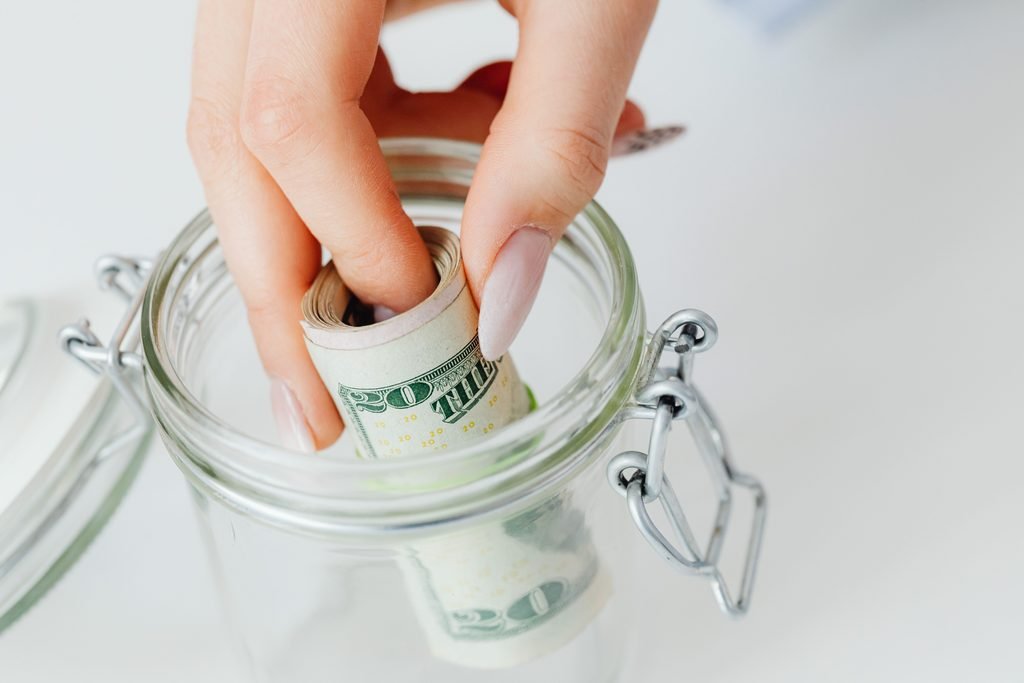
Okay, so you’ve decided you want to do this. Good call. But now comes the question everyone asks: how much money are we talking about here?
The standard advice is three to six months of expenses. I know, I know – that sounds like a fortune when you’re barely getting by month to month. But stay with me, because I’m going to explain why this number actually makes sense.
First, what counts as “expenses”? We’re talking about the bare minimum you need to survive. Not fancy. Not fun. Just survival:
- Rent or mortgage payment
- Utilities (electric, gas, water)
- Groceries
- Insurance (health, car, whatever you’ve got)
- Gas or transportation
- Minimum debt payments if you’ve got loans
We’re NOT talking about Netflix, coffee runs, dining out, or that gym membership you don’t use. That’s luxury stuff. We’re talking about what would happen if your income disappeared tomorrow – what would you absolutely have to pay?
Now, why 3 to 6 months?
Here’s the thing: if you lose your job tomorrow, how long do you think it’ll take you to find a new one? This depends on your situation.
Three months is probably enough if:
- Your job is in a field that’s always hiring (healthcare, tech, trades, etc.)
- You’ve got a partner with their own income
- You work in a big city with tons of opportunities
- You’re healthy and can work right now
- You wouldn’t mind taking a different type of job
Six months is smarter if:
- Your industry is more specialized and jobs are harder to find (finance, education, etc.)
- You’re the only earner in your household
- You’re single with dependents
- You’ve got health stuff that might slow down a job search
- You need a job that fits your specific field
Think about it this way: if your industry goes through a downturn and it takes you five months to find a similar job, you want to have enough cushion that you’re not freaking out and accepting the first terrible offer that comes along. You want to be able to hold out for something good.
Real numbers: Let’s say you’re like most people. Your monthly survival costs (not including fun stuff) are probably around $2,500 to $3,500.
- Three months = $7,500 to $10,500
- Six months = $15,000 to $21,000
Yeah, that’s real money. But here’s the thing – you don’t have to do it all at once. Keep reading.
Starting Your Emergency Fund (Even If You’re Broke)
Okay, this is where 99% of people give up. They do the math, see the number staring at them – $10,000, $15,000, $20,000 – and think: “Yeah, that’s never happening. I’m struggling paycheck to paycheck. This is impossible.”
So they don’t start at all.
This is the biggest mistake.
But here’s the thing I want you to understand: you’re not trying to save $20,000 this month. You’re not even trying to save it this year. You’re building it piece by piece, step by step. It’s like getting in shape – you don’t go from couch potato to running a marathon. You start with a 10-minute walk.
Let me give you a different framework. Think of your emergency fund as a four-stage process. You don’t have to rush. Just keep moving forward.
Stage 1: Get to $1,000 (Aim for 2-4 months)
This is your first checkpoint. A thousand bucks might not sound like much, but it’s life-changing. It’ll cover most car repairs. Most dental emergencies. Most home issues that come up. It buys you breathing room.
How do you get there? Start looking for money you’re already spending. I’m not saying you have to starve yourself or live like a hermit.
I’m saying:
- That streaming service you’re paying $15/month for but haven’t watched in three months? Cancel it. That’s $45 a month right there.
- That fancy coffee you grab on the way to work? Make it at home. That’s another $100-150 a month.
- Those clothes you bought but never wear? Sell them on Facebook Marketplace or Depop. Boom – $200-300.
- Do you have any skills? Freelance on Fiverr or TaskRabbit. Write some blog posts. Walk some dogs. Even an extra $100 a month gets you to $1,000 in ten months.
Most people can find $200-300 a month without completely destroying their quality of life. You’re not giving up everything – you’re just redirecting a little bit of money.
Stage 2: Build to One Month of Expenses (Next 2-4 months)
Once you hit $1,000, celebrate that win. Seriously. You just did something most people haven’t done. Now keep going.
Your next target is one full month of your survival expenses. If your monthly bills are $3,000, you’re aiming for $3,000 in savings. This matters psychologically because now if something happens – job loss, emergency – you’ve got a whole month to figure it out without panicking.
Stage 3: Get to Three Months (Next 6-9 months)
Now you’re getting comfortable. Three months of expenses means you can handle a real job search. You can say no to bad job offers. A major car repair or medical bill doesn’t destroy you. This is solid financial ground.
Stage 4: Build to Six Months (Next 6-12 months)
If you can get here, you’ve basically won the security game. Most people stop here, and honestly, you probably should too. Six months of expenses is peace of mind. It’s freedom. It’s the ability to handle almost anything life throws at you.
The whole journey from Stage 1 to Stage 4? For most people, that’s about 12-18 months. Maybe two years if you’re doing it slowly. That’s totally fine. You’re playing the long game.
Where to Keep Your Emergency Fund (This Actually Matters)
Here’s a mistake I see people make all the time: they save up their emergency fund and then keep it in their regular checking account with all their other money.

Don’t do this. Seriously.
Why? Because it’s too easy to spend. You see the number there, and your brain thinks “oh, I’ve got money!” Next thing you know, you’re using your emergency fund for a vacation, or new furniture, or just regular life stuff. The money disappears, and then when an actual emergency hits, you’re back to zero.
You need to separate it. Put it somewhere it’s not staring you in the face every day.
Also, don’t put it in the stock market. I know this is tempting. Stocks average like 10% returns, and your brain is like “free money!” But here’s the problem: what happens when you need that money at 11 PM and the market just crashed 25%? You don’t want to pull out when you’re down. You also don’t want to wait three days for money to transfer while you’re dealing with a crisis. Emergency fund money needs to be accessible NOW, not “eventually when the market recovers.”
Here’s where you should actually put it:
Option 1: High-Yield Savings Account (This is the best option)
Look into banks like Ally, Marcus, or Wealthfront. Right now they’re paying around 4-5% interest on savings accounts. That’s WAY better than the 0.01% you get at your regular bank.
Why this works:
- Your money is accessible within a day or two if you need it
- It’s FDIC insured (government backs it up to $250,000)
- You’re actually earning interest instead of losing money to inflation
- It’s at a different bank, so you’re less tempted to spend it
Pro tip: Open the account at a completely different bank than where you do your regular banking. Don’t link your debit card to it. Make it slightly inconvenient to access. This sounds backwards, but it works.
Option 2: Money Market Account
Similar to a savings account, but sometimes with slightly better interest rates and more flexibility. Still FDIC insured. Still safe. This works fine too.
Option 3: Regular Savings Account (Last Resort)
Your traditional bank’s savings account is better than nothing, but honestly the interest rates are terrible – like 0.01%. It’s such a tiny return it’s basically worthless. But if that’s the only option you’ve got, at least it’s better than keeping it in checking.
What you absolutely should NOT do:
- Don’t keep your emergency fund in your regular checking account (you’ll spend it)
- Don’t invest it in individual stocks or crypto or anything volatile
- Don’t lock it in a CD that takes five years to mature
- Don’t use it to pay off debt – that’s a different goal
- Don’t listen to anyone telling you to invest it “for growth” – that’s not what this money is for